I remember the “Golden Age” of the web not by the startups that went public, but by the scripts I used to chmod 755.Back in 2004, if you wanted a voice online, you built a house. I started with Movable Type, wrestling with Perl and `.cgi` scripts, before eventually migrating to the “five-minute install” of early WordPress. Whether you were a static-site purist or a dynamic PHP enthusiast, the philosophy was the same: “Sovereignty.”
Your blog was your property. You owned the database, you owned the brand, and you owned the relationship with your readers. WordPress was our common ground—a shared architectural language that allowed us to build custom, beautiful homes on our own plots of digital land.
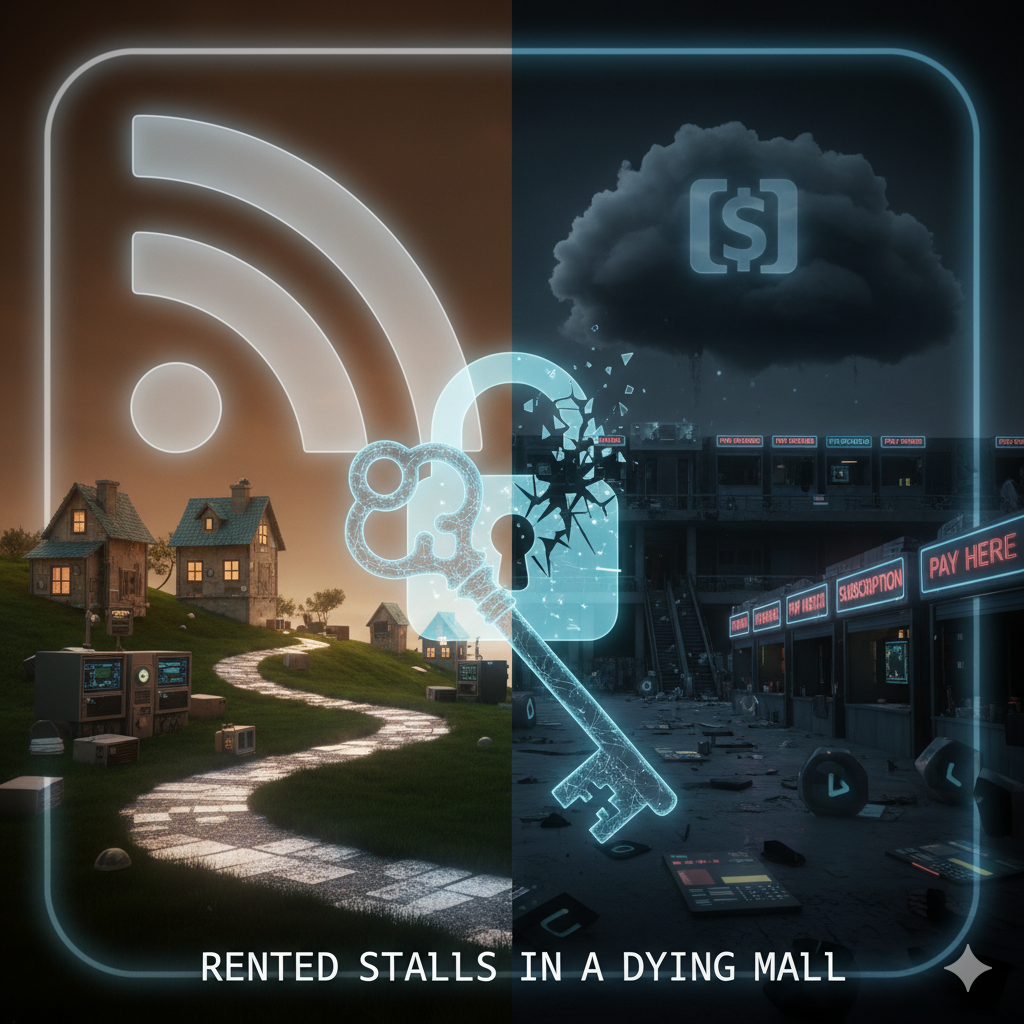
I stepped away from the active social blogging ecosystem for a few years. Coming back now, I feel like a man returning to his old neighborhood only to find it’s been paved over and turned into a shopping mall where the escalators are broken, the rent is triple what it should be, and the security guards are fighting with the shopkeepers in the parking lot.
Cory Doctorow has a term for this: “Enshittification.” And WordPress is currently putting on a masterclass.
The Death of the House, the Rise of the Stall
The web used to be a collection of houses. Some were messy, some were architectural marvels, but they were *homes*. Today, the web feels like a collection of rented stalls in a dying mall.
When I logged back into a fresh WordPress installation recently, I didn’t see a tool. I saw a marketplace. The modern WordPress admin dashboard is no longer a quiet place for a writer or a developer to work; it is a wall of “Go Pro” banners, nagware notifications, and “limited-time offers.”
In the “Golden Age,” if I wanted a contact form, I wrote a bit of code or found a community-supported plugin that just worked. Today, every “free” plugin is a lead-magnet for a subscription. Want to export your data? *Pay a monthly fee.* Want basic SEO fields? *Subscribe to a Pro plan.* Want to stop your dashboard from looking like a Times Square billboard? *That’ll be $49/year.*
We’ve moved from being homeowners to being digital sharecroppers. Even the “open source” nature of the platform feels like it’s being used as a branding shield rather than a community ethos.
Stage 3 Enshittification: The Scorched Earth
Doctorow’s theory posits three stages: first, platforms are good to users; then they abuse users to help business customers; finally, they abuse those business customers to claw back all the value for the platform owner.
WordPress has officially entered Stage 3.
The recent, ugly warfare between Automattic and WP Engine—complete with the “nuclear” seizure of the Advanced Custom Fields (ACF) repository—is the smoking gun. When the person holding the keys to the infrastructure begins breaking the ecosystem’s plumbing to settle corporate scores, the “common ground” is gone. The repo, which we once viewed as a public utility, has been weaponized.
As a developer, that is the ultimate breach of trust. If the “Secure Custom Fields” debacle taught us anything, it’s that your “property” in the WordPress mall can be rebranded, forked, or taken over overnight if the mall manager decides he doesn’t like your landlord.
Why Did We Give It Away?
What surprises me most, however, isn’t just that the tools got worse—it’s that we let the culture die.
While I was gone, everyone seemed to jump headfirst into giving away their content. We traded our independent blogs for Substack, Medium, and X. We traded our sovereign houses for 280-character cells in a high-rise owned by billionaires.
We were told it was for “reach” and “engagement,” but we sacrificed the one thing that actually mattered: “Persistence.” If Substack changes its algorithm, your business model dies. If X gets bought by a mogul with a grudge, your brand disappears.
We traded our deeds for “likes,” and we’re only now realizing that the landlord can change the locks whenever they want.
Returning to the Neighborhood
So, where does an “old-school” developer go from here?
The WordPress of 2025 is a bloated, litigious, subscription-heavy shadow of the tool I once loved. It’s no longer a place for builders; it’s a place for “consumers” of “blocks” and “pro licenses.”
But the beauty of the web is that the protocols—HTML, CSS, RSS—still work. We don’t have to live in the mall. We can go back to building houses. Whether it’s moving to static site generators like Hugo or Eleventy, or migrating to leaner, more focused platforms like Ghost or ClassicPress, the goal remains the same:
Reclaim your sovereignty.
I’m done with the rented stalls. I’m going back to chmod-ing my own files and owning my own words. The mall is dying, but the neighborhood is still out there, waiting for us to rebuild.